
Reproduced from:
Fabrizio Pregadio, Awakening to Reality: A Taoist Classic of Internal Alchemy
Golden Elixir Press
Text
1 學仙須是學天仙,惟有金丹最的端。 3 二物會時情性合,五行全處龍虎蟠。 5 本因戊己為媒娉,遂使夫妻鎮合歡。 7 只候功成朝北闕,九霞光裏駕翔鸞。
Translation
Notes to Poem
 See also Liu Yiming's commentary to this poem
This poem concerns an essential aspect of Internal Alchemy: the collection of True Yang, which is the initial ingredient of the Elixir. As soon as one comes upon True Yang — which in fact is continuously regenerated within the postcelestial domain, even though it is hidden from it — one should store it safely and let it join with one's True Yin, the fundamentally pure consciousness that underlies the cognitive mind.
Notes to Verses
1-2. You should know that the source of the stream, the place where the Medicine is born, is just at the southwest — that is its native village. The symbolism of the first half of this poem is complex. The Medicine is True Yang. In the postcelestial domain (the world in which we live), True Yang is contained within Yin, and is represented by the unbroken line within Kan ☵. This line is the One Breath that Kun ☷ receives from Qian ☰ as they unceasingly stay joined with one another. On the one hand, therefore, the One Breath is hidden from the world (being concealed within Kan ☵), but on the other hand, it is constantly regenerated by Kun ☷. Since Kun, in the postcelestial domain, is positioned at the southwest, Zhang Boduan says that "the place where the Medicine is born is just at the southwest," and calls this the "native village" of True Yang.
This page is part of a series on the Awakening to Reality. See the complete index.
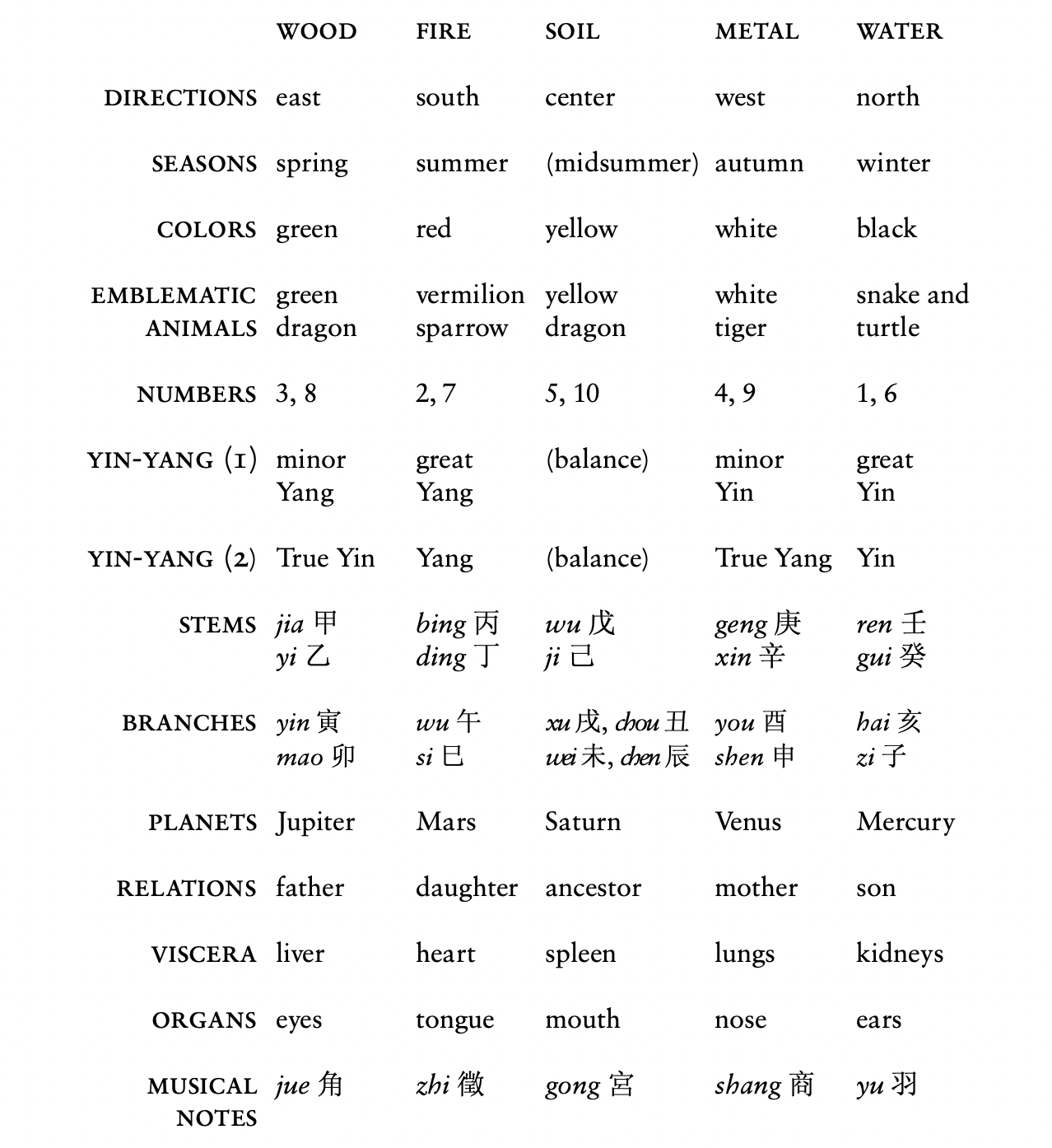
3-4. When Lead meets the birth of gui, quickly you should collect it: if Metal goes past the full moon, it is not fit to be savored. These lines essentially repeat the concepts presented in the first two lines. True Yang here is represented by Lead. Gui is one of the two celestial stems associated with Water; it stands, in particular, for the postcelestial aspect of Water, i.e., Kan ☵. In other words, Zhang Boduan says that Lead, or True Yang, should be collected as soon as it is born within Kun ☷. In the cycle of the lunar month, Yang culminates on the fifteenth day and then declines; therefore the full moon illustrates the symbolic "time" when the collection of True Yang should take place.
Awakening to Reality
Written in the 11th century, this famous work describes Neidan (Internal Alchemy) in poetry
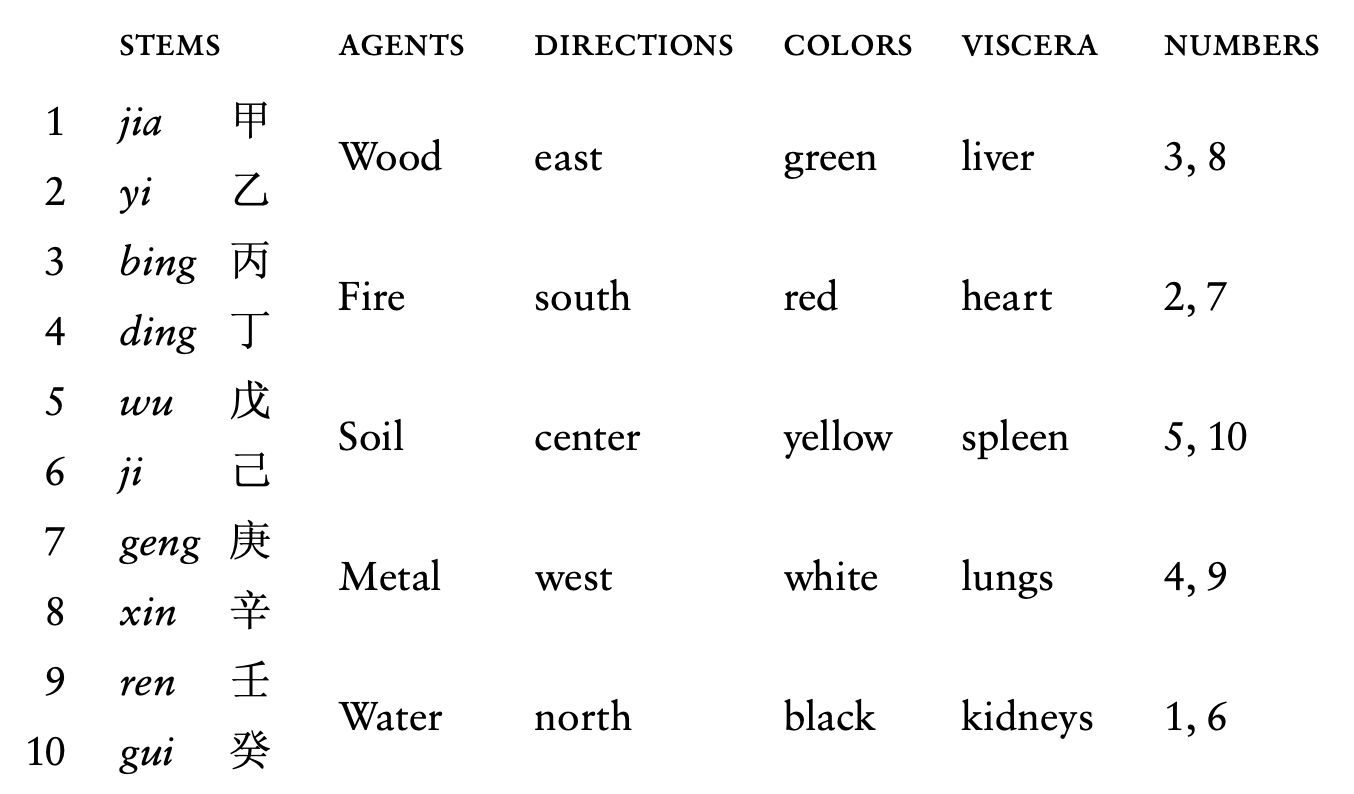
5-6. Send it back to the earthenware crucible, seal it tightly, then add the Flowing Pearl, so that they are match for one another. The term "earthenware crucible" (tufu) derives from External Alchemy. In Internal Alchemy, it denotes the lower Cinnabar Field (dantian). The word tu, translated as "earthenware," is also the term for Soil, which among the five agents represents the center. This explains why, in line 2 of Poem 5, Zhang Boduan refers to the lower Cinnabar Field saying: "in the correct position of the Center the Mysterious Pearl is born."
The Flowing Pearl (liuzhu) is True Mercury, which generates the Elixir when it joins True Lead. This term is an abbreviation of Flowing Pearl of Great Yang (taiyang liuzhu), which denotes True Yin within Yang. See the note to Poem 12, lines 3-4.
7-8. For the Medicine to weigh one pound the Two Eights are needed; regulate the fire phases relying on Yin and Yang. The expression "two eights" has two meanings in Neidan. First, in the traditional Chinese weight system, one pound (jin) corresponds to sixteen ounces (liang). The symbolic "pound" of Elixir, therefore, is made of eight ounces of Lead and eight ounces of Mercury. The second meaning is more complex and is related to the “fire phases” based on the lunar cycle. The waxing quarter of the Moon occurs at the middle of the first half of the month, eight days after the black Moon (novilune); the waning quarter occurs at the middle of the second half of the month, eight days after the full Moon (plenilune). Therefore the waxing (Yang) and waning (Yin) quarters of the Moon — which actually appear in the night sky as "halves" rather than "quarters" — are both represented by the number 8, and constitute the "two eights." Since line 7 mentions the weight of "one pound," and line 8 states that one should "regulate and adjust the fire phases relying on Yin and Yang," both meanings of the expression "two eights" are relevant to the present poem.
© Golden Elixir Press